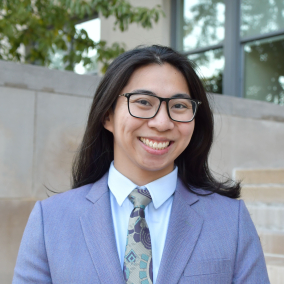
Phi Adajar
Job Market Candidate
Research Fields
Labor Economics, Market Design, Development EconomicsContact Information
Email Address
phiadajar@mit.edu
Website
padajar.com
Affiliations
Blueprint Labs
References
Parag Pathak
Esther Duflo
Nikhil Agarwal
Phi Adajar, Nagisa Tadjfar, Kartik Vira
High-stakes final exams play two roles in university admissions: they give students an incentive to exert effort, and they give universities information with which to screen applicants, shaping the equilibrium match. We study these forces using the staggered rollout of unconditional offers in the UK, which let some students matriculate without requirements on their age-18 exams (A-levels). Students who accept an unconditional offer score 0.14 SD below those who decline one, conditional on observables. However, using a two-way fixed effects specification, we find that exposure to unconditional offers has precisely zero impact on students' age-18 exam performance, indicating that the observed gap is driven by private information. Exposure to unconditional offers increases university matriculation by 1.1 percentage points, mostly at middle-tercile universities. A structural model that incorporates the value students place on certainty of admission shows that, in equilibrium, recipients' gains come at the expense of non-recipients. Relative to a ban, unconditional offers lower total student welfare by 0.7%, hurting the three highest-achieving quartiles of students. Post-qualification admissions, under which students apply after receiving their scores, raise welfare by 12.5% through better sorting. Our results highlight how the distributional effects of admissions policies depend on student information, informing current policy debates in the UK.
Research Papers
Phi Adajar, Esther Duflo, Glenn Ellison, Sara Fisher Ellison, and Harini Kannan
This paper presents evidence from a randomized controlled trial designed to test how to best identify and support gifted students from disadvantaged backgrounds. To do so, we offered access to an advanced online prealgebra course and an internet-enabled tablet to 7th-grade public-school students from Tamil Nadu, whom we identified as having high potential using several alternative strategies. Our primary finding is that we were able to successfully identify students who succeeded in challenging coursework originally designed as enrichment material for students with much stronger math preparation.
We randomly assigned identification methods, which allowed us to investigate their relative effectiveness. We find that the combination of existing administrative scores and engagement with an extract of the textbook distributed as a physical booklet best predicts engagement and success with the course material. We additionally cross-randomized treatments to evaluate program design (including group and individual tutoring, incentives for students, access to computer labs), and find that the simplest-to-scale version without tutoring led to the highest engagement.
Phi Adajar
Centralized school assignment with lottery tie-breaking generates quasi-experiments that identify school effects, but existing methods require applicants’ rank-order lists and lottery numbers, data that is not always available. I characterize which data from a match identify a propensity score under which offers are ignorable. When each school draws its own lottery, offers among applicants who reach a school are randomly assigned, so comparing applicants offered and rejected there requires only waitlists. Under a single lottery, this comparison is biased, and the order of each applicant’s rejections is also needed. Rank-order lists identify the score without lottery numbers, while the assignment and published aggregates do not in general. I show how to compute each score in finite markets, how waitlist order reveals which schools share a lottery, and how to handle priorities and screened schools. In simulations, all valid designs recover the true effect, and richer data yields more precise estimates.
Phi Adajar
Affirmative action policies based on geographic characteristics are potentially manipulable by families who move in response to the policy, undermining policy goals and hurting families who the policy is intended to help. I test whether these channels have significant impacts in Chicago, where admissions to selective high schools depend on the demographics of a student’s neighborhood. Using data from Chicago Public Schools and the Cook County Assessor’s office, I find no effects of marginal tier assignment on short-term migration of families or long-term housing prices.
Work In Progress
Phi Adajar
This paper estimates how the effectiveness of Chicago charter schools has changed between 2009 and 2025. Using random variation from admissions lotteries, I validate earlier research showing high returns to attending Chicago charter schools. I also show effectiveness decreased during the 2010s, but has rebounded in recent years. I explore determinants of these changes, including teacher qualifications, teacher turnover, leadership changes, curricular changes, and policy changes.
Awards and Honors
2025
Jerry A. Hausman Dissertation Fellowship, MIT Economics
2025
NBER Doctoral Dissertation Fellowship, Global Math Talent
2021
NSF Graduate Research Fellowship
2021
Phi Beta Kappa, MIT